CategoriesSchoolTechnology

Cognitive Offloading

“The danger of the future is not that machines will begin to think like humans, but that humans will begin to think like machines.”

— Sydney J. Harris | #CognitiveOffloading

I have a confession to make, and it’s embarrassing: my spelling and grammar have gone directly into the toilet over the last eighteen months.

It didn’t happen because I suffered a head injury, and it didn’t happen because I suddenly forgot how the English language works. It happened because modern Large Language Models have gotten so terrifyingly good at parsing whatever phonetic slurry I vomit into the prompt box that my brain simply stopped bothering with syntax. When you’re in the zone, trying to push progress forward at 100 miles per hour, you realize the machine doesn’t give a damn about commas, capitalization, or whether you used “their,” “there,” or “they’re.” It interprets your chaotic garbage with surgical precision.

So, in the sacred name of momentum, all writing discipline went out the window. My prompts look like a drunk raccoon ran across a mechanical keyboard at 3:00 AM. And because the AI spits back a pristine, articulate answer every single time, my brain’s laziness circuit got a big, juicy hit of dopamine. That was warning shot number one.


1. Using a Nuke to Hammer a Nail

There is a specific kind of modern insanity where you commit staggering, planetary-scale computational overkill just because the input box is sitting open on your second monitor.

Case in point: last week I needed a corporate logo for a rapid prototype mockup. In the sane, pre-AI world, the protocol was elementary. You open a new browser tab. You type the company name into Google Images. You click “Tools,” filter by “Color: Transparent,” right-click the PNG, and drag it into your canvas. Time elapsed: 8 seconds. Compute expenditure: roughly 0.00004 watt-hours.

Instead, what did I do? Like an absolute lunatic, I opened Midjourney and burned through an ungodly cluster of liquid-cooled enterprise GPUs in a remote data center to hallucinate a synthetic approximation of a logo that already exists on six thousand free public CDNs.

It is the literal definition of using a thermonuclear warhead to hammer in a picture hook.
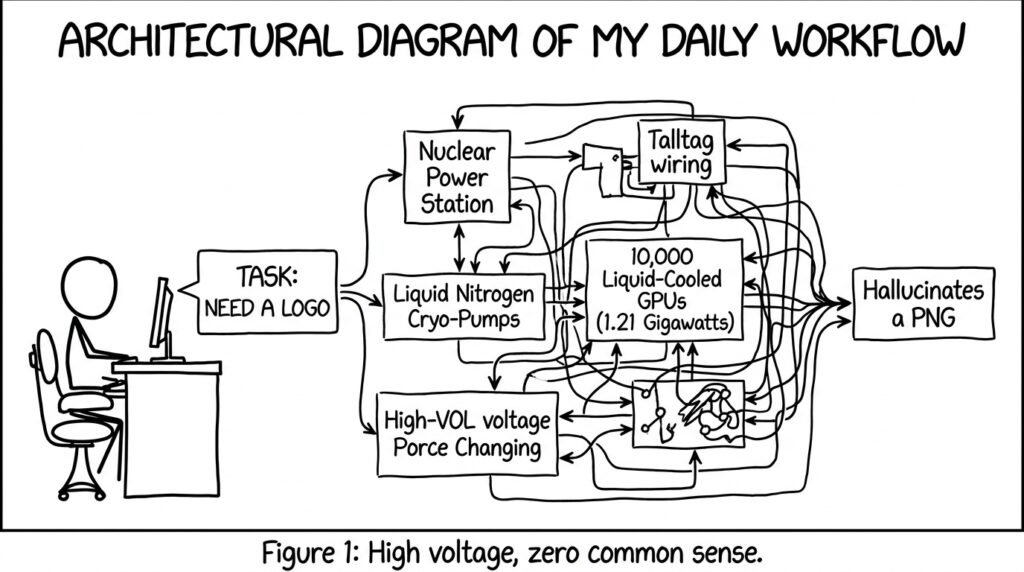
Figure 1: Architectural diagram of my daily workflow. High voltage, zero common sense, like this image

It brings out our worst, most slothful human impulses. But if you have ADHD like I do, AI doesn’t just make you lazy; it puts your hyper-fixation engine into uncontrolled redline. In the past, having a weird technical itch came with built-in speed bumps. If I wanted to resurrect an obscure 1998 PC abandonware game by reverse-engineering the binary to patch memory leaks on modern x86_64 silicon, the sheer friction of tooling would usually talk me out of it by midnight. Or I would get tired of it and find some new shiney project to work on.

Now? The friction is dead. The barrier between “I wonder if I could decompile this DLL” and “Holy shit, it’s compiling” has shrunk to twenty minutes. It’s intoxicating. It hands you superpowers, but it also leaves you at 4:00 AM with nineteen half-deployed GitHub repos, four domain names you just registered, and an attention span that looks like a shredded tire.


2. Telemetry and Studies: Is AI Actually Rotting Our Brains?

It turns out that creeping sensation of mental flabbiness isn’t just self-loathing. It’s measurable neurology.

Cognitive psychologists have tracked cognitive offloading for years. Its the process of delegating memory and processing to external hardware. But recent research from the MIT Media Lab put hard telemetry to it. By hooking participants up to EEG monitors during analytical writing exercises, researchers found that users who outsourced synthesis and drafting directly to generative AI registered the lowest levels of frontal lobe engagement compared to those doing standard manual search or raw writing. When you eliminate the sweat of structuring an argument, your neural retention flatlines.

The starkest breakdown of this dynamic comes from a landmark working study conducted by Wharton researchers Hamsa Bastani, Osbert Bastani, and Alp Sungu: Generative AI Can Harm Learning. They tracked thousands of high school students tackling STEM curriculum under controlled conditions:

  • The Crutch Effect (Raw LLM Access): Students given unfettered access to standard ChatGPT solved 48% more practice problems during study drills. They felt invincible. But when they sat down for independent proctored exams without the AI, they bombed—scoring 17% worse than students who had never touched an AI tool at all. They had confused the bot’s competence with their own.
  • The Tutor Effect (Scaffolded Guidance): When the researchers constrained the model to act as a Socratic tutor, refusing to spit out answers, providing conceptual hints, and forcing the student to execute the logic it all reversed.

The empirical takeaway is brutal in its clarity: Using AI to generate your answers rots your brain. Using AI to interrogate your own thinking sharpens it into a scalpel.


3. The Gentrification of the Web: RIP to My 90s Fantasy Football Site
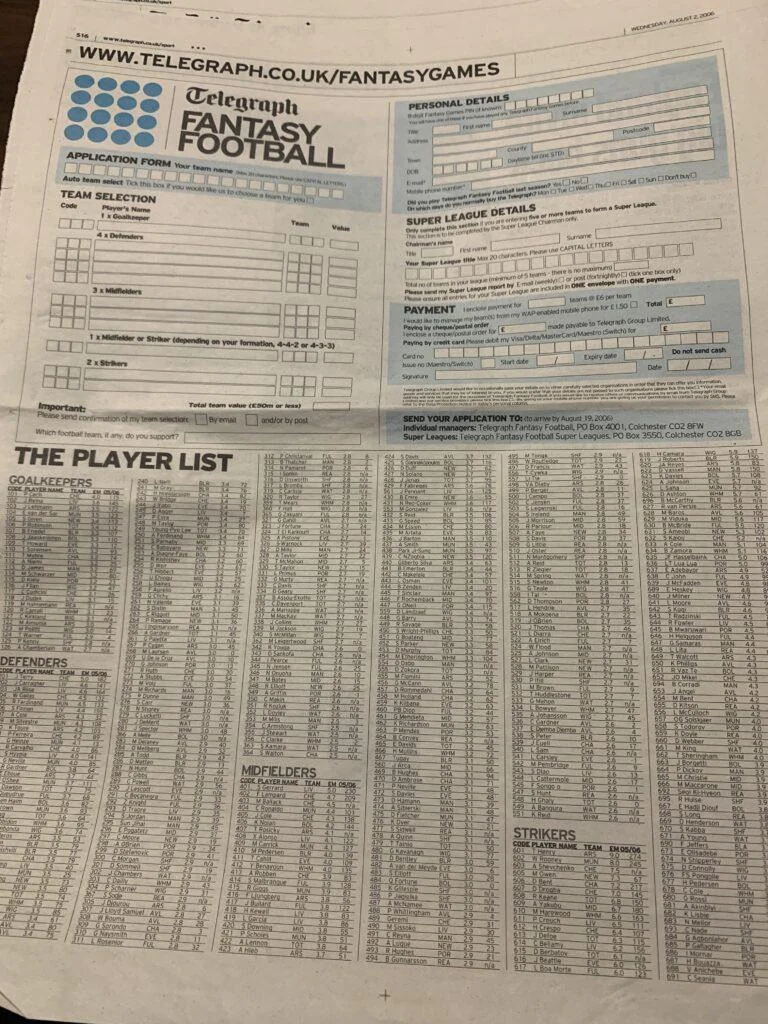
Beyond our frying synapses, there is an aesthetic tragedy unfolding across the internet: the wholesale murder of human weirdness in web design.

AI has caused the commoditization of frontend engineering. Anyone with twenty bucks and an API key can prompt a responsive web application into production. On paper, that democratization is a miracle. In practice, because these models are trained on the median aesthetic consensus of Silicon Valley venture-capital pitches, every single new website looks exactly the damn same.

You know the look: rounded Bento box grids, pastel blur gradients, 48-pixel floating sans-serif headers, and acres of empty glassmorphism panels that display four pieces of data across an entire 27-inch 4K monitor. It is sterile, corporate, AI maximalist beige.

Here is my villain origin story: I belong to a fantasy football league that has been running uninterrupted since the early 1990s. For over two decades, our league was hosted on an independent platform that had not touched its UI codebase since roughly 2002. It was glorious. It had raw HTML tables. It had high information density. It wasn’t flashy like the ESPN or Yahoo apps, but you could see every roster, matchup, and waiver wire transaction on a single screen with zero latency.

Two weeks ago, we logged in for our annual draft. Some well-meaning developer had clearly taken a prompt-to-code tool and unleashed a full AI-maximalist overhaul across the entire stack. Everything was hidden behind floating accordion menus. Player cards took up half the viewport. The draft board looked like an uninspired SaaS landing page for an enterprise cloud analytics suite. I wanted to throw my mac book through the drywall.

I miss the jagged, unpolished edges of human web design. I miss ugly, bespoke utilities built by people who cared about solving an actual problem rather than showing off how many animated CSS backdrop-filters their framework could render before your laptop fans spun up.


4. Incident Review: Where the Leverage is Unbeatable

So am I ready to smash my silicon and retreat to the woods? Not yet. Because when you strip away the Silicon Valley marketing slop, the real-world operational multipliers are staggering. In my own life, AI has become needed in two high-stress domains:

A. The Cybersecurity Degree Grind

I am currently grinding through my Bachelor’s degree in Cybersecurity. In technical domains, relying on an LLM to write your assignments is suicide. I wouldn’t survive a single live technical interview or certification exam. But using it as an adversarial sparring partner? Fuck me.

Think about the historical shift: our parents went from thumbing through microfiche and library card catalogs to querying early AltaVista and Yahoo. That leap compressed weeks of research into hours. AI represents that exact same generational leap forward. When I’m analyzing packet captures in Wireshark, auditing firewall configurations, or staring at x86 disassembly, I don’t ask the model for the answer. I have it spin up targeted diagnostic quizzes, explain obscure RFC edge cases, and challenge my mitigation logic. It turns passive cramming into active, high-tempo red-teaming. Though I admit sometimes I just want the answer.

B. First-Generation “AI Parenting” at 2:00 AM

My wife and I have zero family living nearby. When our kid wakes up at 2:15 AM screaming inconsolably with an unusual symptom, or when a bizarre behavioral curveball hits at school, our parents aren’t always awake or available on speed dial.

We are among the very first generation of human beings raising children with large language models on our nightstands. I plan to write an extensive standalone piece on this dynamic, but the candid reality is that AI has been an indispensable, unflappable triage partner. It doesn’t replace our pediatrician, or any required professional but it does lend the proverbial hand. The reason it works is simple is pretty simple. I grew up in the era where teachers docked full letter grades if you failed to cite primary sources, and where quoting Wikipedia was treated like academic treason. That battle-tested reflex is permanently hardwired into my nervous system: Trust, but verify. Hopefully thats the same in todays school but I have a feeling its not.


5. Postmortem: Cutting Through the Hype

Let’s be real about Big Tech’s current rhetoric: the venture-backed sales pitch is 80% breathless bullshit. AGI is not showing up next Tuesday to take your job, write your novels, and solve the heat death of the universe. The hype is suffocating, and the grifters are out in force. Yet, sneering at the technology and pretending it’s a useless toy is just as stupid. Across infrastructure engineering, vulnerability research, and everyday household triage, the practical leverage is real, permanent, and compounding. It sucks because peoples lives will and are being affected.

The dividing line isn’t technological; it’s behavioral. If you use AI as a mental couch potato machine to avoid the sweat of thinking, it will hollow out your grammar, dull your reasoning, and turn your creative output into generic corporate sludge. But if you treat it like an on-demand sparring partner and you force it to test you, question you, and accelerate the hard work, it’s the most potent tool since the invention of the compiler.

Keep your grammar tight. Respect the struggle. And for the love of God, leave the 2002 fantasy football layouts alone.

Authors Note: I am trying to get back into writing posts. For reasons already listed here I need to keep my brain challenged or I am going to end up typing everything in wingdings. I look forward to chatting with everyone again and keeping my little piece of the internet lively and green.


CategoriesAiEverything Else

AI and our Future Part 1: The Good, The Bad, The Ugly

Posted on March 9, 2023by jwallace

“Artificial intelligence and machine learning, as a dominant discipline within AI, is an amazing tool. In and of itself, it’s not good or bad. It’s not a magic solution. It isn’t the core of the problems in the world.” -Vivienne Ming, executive chair and co-founder, Socos Labs

In this multi-part series, I will be discussing Artificial Intelligence (AI) and its effect on humanity and our future. A lot has already been written about AI and its effects, especially with recently released tools like ChatGPT and Stable Diffusion. However, much of what has been posted, liked, upvoted, and recycled on the internet involves fear and clickbait. In part 1 of this series, I will talk about the good, the bad, and the ugly side of our AI future.

The Good

There are many things that AI and the computers they are built on can do better than humans. Number crunching, holding information, automation, and pattern recognition. As the computers we build become faster and faster, the AI we build on top of them becomes smarter and smarter. While there is much to be afraid of, there is a lot to be optimistic about as well. For example, let’s talk about AI in healthcare and medicine. In 2022, my wife was experiencing lower back pain that would not go away. It continued to the point that she could not lay in bed and would be curled up on the floor in extreme pain. After a couple of trips to the emergency room and an MRI scan, the hospital found that a spinal disk had bulged out and was compressing her spinal cord. This type of injury is called Cauda equina and it is an emergency medical situation. The closest hospital to us is small but it does serve a retirement community that requires a lot of back-related surgeries. Because of this, the hospital had recently hired a new surgeon and bought a new AI-powered, robotic arm for back surgeries called Excelsius GPS. The arm was designed to assist doctors during surgeries by improving placement (cuts), reducing the need for radiation imaging, and decreasing operating time. Without that AI-assisted machine and her surgeon, she would have had to be flown to larger hospital hours away. After the surgery, the surgeon stated that if she had been airlifted she would most likely have been paralyzed from the waist down.

ExcelsiusGPS in action. https://www.globusmedical.com/musculoskeletal-solutions/excelsiustechnology/excelsiusgps/

Not only can AI help assist doctors in surgery but it can also help in one of the hardest parts of medicine, diagnosing a patient. How many times have you gone to a doctor’s office with an aliment and it takes multiple blood tests or imagining to figure out what your aliment is? In 2018 an AI called Biomind beat a team of doctors in Beijing in diagnosing brain tumors and hematoma expansion. It was able to look at brain scans and diagnose correctly 87% of the time vs the human doctors who were only able to diagnose 66% correctly. In 2020, a state-of-the-art associative AI was pitted against 44 doctors in a test set of 1671 real medical cases. The AI was able to diagnose 77.26% correctly while the doctors were only able to diagnose 71.40%. Imagine a world where you can type in your symptoms and get a reasonable diagnosis within minutes. Or how about an implant that can monitor your body and alert you instantly to a medical emergency or a growing tumor?

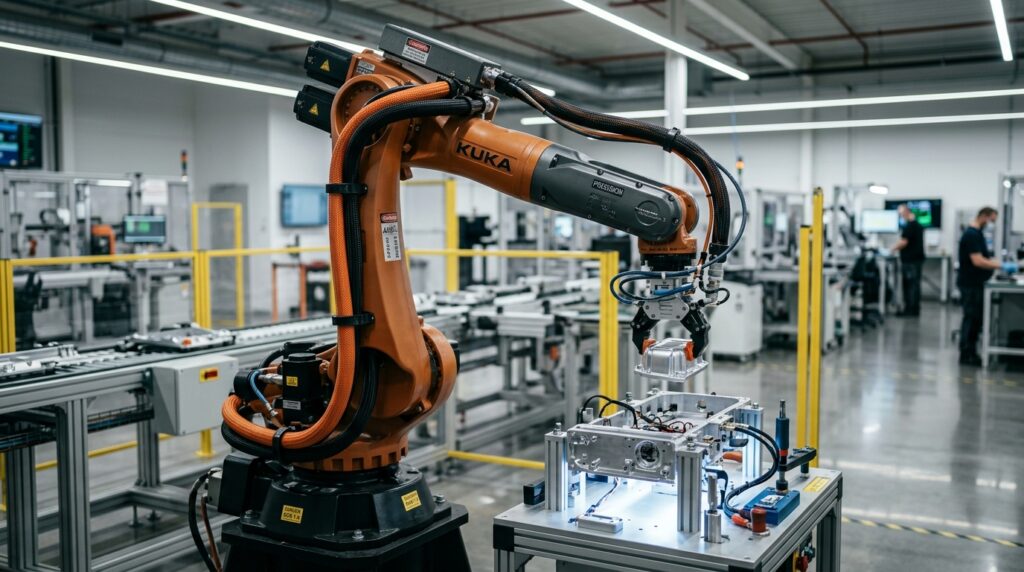
AI-generated warehouse robot

What about AI in productivity and manufacturing? A company I worked for wanted me to head out to their warehouse and map out and hang wireless access points. They wanted this because they were setting up an AI-assisted warehouse system to pick, pack, and ship products. The goal is that it would increase product tracking and product movement from their warehouse to the customer. Hell, the access points we went with had AI built into the software to help with dropouts and signal optimization. In the service industry, tools like ChatGPT can handle routine customer support requests, freeing up employees to handle more complex tasks. Developers and software engineers can speed up coding by having AI write the mundane structures of the code while they handle the more complex algorithms. Companies like Microsoft, Salesforce, and Google are using AI to help users write emails and generate marketing content.

One of the most valuable finite resources in the world is time. The time we have on this earth is finite (at least for now) and AI has many benefits in assisting our lives and giving us back time. That being said AI could certainly come to the point that it gives people too much time by taking over entire industries and jobs. This leads us to…

The Bad

Right now we live in an AI-assistive world. I use it for spell-checking and article flow. I use it to check my code and format it correctly. I use it for image generation and even SEO. So what happens when AI assistive becomes AI controlling? Let’s start with the fat elephant in the room which is Chatgpt created by OpenAi. ChatGPT is a:

.. a model called ChatGPT which interacts in a conversational way. The dialogue format makes it possible for ChatGPT to answer followup questions, admit its mistakes, challenge incorrect premises, and reject inappropriate requests.OpenAi

If you haven’t used it I would highly suggest going over and having a conversation with it. I myself have used it countless times since its release to test its limits and to assist me in tasks. That being said companies are already replacing customer support roles with ChatGPT. As time goes on here are some more jobs that could very easily be replaced in the near future:

This list isn’t exhausting but it does paint a rather scary picture. I have no timeline on when any of this could take place but it will happen. Before refrigeration, there used to be a profession of ice cutters who would cut ice and deliver it to storage houses. When refrigeration was invented I am sure the outcry was vocal and loud. Jobs will certainly be created to manage and design AI but it won’t happen overnight and it’s hard to tell if it will create more than it destroys.

Icecutters in TorontoOntario, Canada, 1890s

What about AI creating inequality and discrimination? AI isn’t free. It requires powerful hardware and software to make it work. While Stable Diffusion which can generate text to image and ChatGPT are free, ChatGPT is already selling a paid service. Almost every major tech company is planning to offer AI to the masses, most will have a paid service of some sort that will offer more features and speed. How does someone with little means compete with someone who can afford it and is assisted by AI?

AI can also be discriminatory. Most machine learning is trained on data: AI models are only as good as the data they are trained on. If the training data is biased or incomplete, the AI model will make biased predictions. For example, if an AI model is trained on historical data that includes discriminatory patterns, the model may perpetuate these biases by making unfair decisions. AI can also be inherently biased, even if the training data is unbiased. This is because the algorithms are designed by humans who may unconsciously embed their own biases into the algorithms. For example, an AI algorithm designed to screen job applications may discriminate against certain groups of people if the algorithm is designed to favor certain educational backgrounds or work experiences that historically disadvantaged these groups. AI is only as good as the data it was created on and the people who created it.

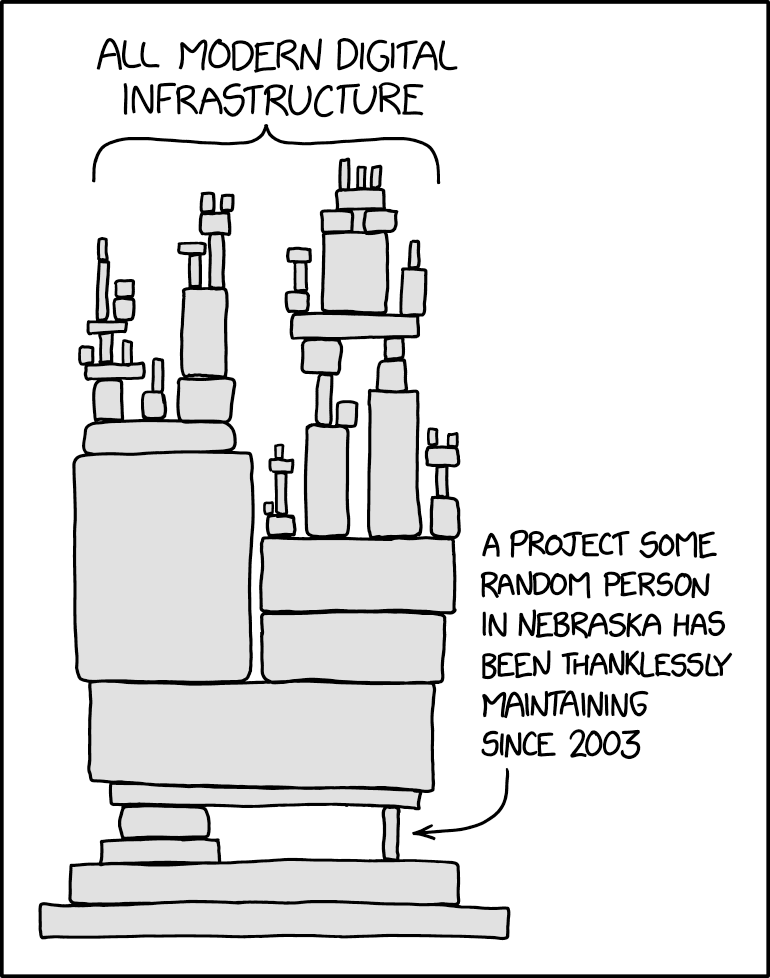
https://xkcd.com/2347/

I debated putting this last part in the ugly category because I already see it happening in our day-to-day lives. AI is becoming a crutch and it can certainly lead to our loss of certain human skills in the future. Most of us would struggle to get somewhere new without GPS and our favorite map apps. When I cook I constantly ask Alexa to set cooking timers for me. We use it without knowing when we are searching for information and troubleshooting problems. If you ever have some free time and like reading science fiction then I suggest you read The Foundation Series by Isaac Asimov. In the story, humanity is at its apex in all things. The Empire spans the galaxy and has been stable for 12,000 years. However, the Empire and its citizens rely on technology to the point that the foundation of knowledge that got them there is lost. At one point in the story, a colony makes a deal with four more powerful nations because they understand nuclear power and the other nations do not.

AI could become a crutch to the point that we lose foundational knowledge. For example, let’s say I am writing a program that will pull IPv4 addresses out of a random list of IPv4 and IPv6 addresses. I get stuck and so I ask ChatGPT to write me a regex command for IPv4. In seconds it supplies me with the code and I am on my way. Is that helpful? Yes. Do I understand the code it gave me? No. It is one thing to ask a question and something else entirely to understand the answer. Even with job displacement, economic and social inequality, discrimination, and loss of human skills, there are still things AI can do that are even worse. This leads us to…

The Bad

With great power comes great responsibility. Stan Lee – The Amazing Spiderman

Like almost anything AI can be abused. It can be used to deceive you, hurt you, and even one day kill you. AI is a tool and in the wrong hands, a tool can just as easily become a weapon. I work as a security engineer and every day I have to stay on top of new threat intelligence. Maybe a piece of software or hardware has a flaw that needs to be patched or a hostile actor is sending our employees phishing emails to steal their credentials. It’s a never-ending game of wack-a-mole. So it disappointed me to hear that people with little to no coding experience were writing ransomware using AI. These people were having chatGPT write ransomware that if run on a user’s machine will look for specific files and encrypt them for extortion. Now, imagine someone with actual experience using the tool.

Created using Stable Diffusion 2.1

Speaking of extortion and blackmail what about AI image generation? A tool that has been in the news a lot lately, Stable Diffusion, can take text and generate an image. It requires no skills other than typing out what you want in as much detail as possible. You can also upload an image and have it changed for you. Imagine, a teenager is mad that a girl rejected him so he goes on Instagram and downloads an image of her. He downloads an edited version of Stable Diffusion that allows adult content to be generated and removes her clothes. He then sends it to all his friends.

It’s not just images that AI can generate but voice and video as well. A couple in Canada lost $21,000 after a scammer called them using their son’s voice. So much of our data is out on the internet. It doesn’t take much for a scammer to piece enough together to potentially ruin your life. Just like in the real world where one tool is created and another one is created to counter it, you cannot put this genie back in its box. It will be a constant game of wack-a-mole to defend against these scams and malware.

War on our planet will also be affected by AI. Already, militaries have introduced AI-powered wingmen that will fly next to fighter aircraft. These aircraft fly autonomously and are used to scout the battlefield and absorb enemy fire. Some companies are using AI-powered robot dogs to patrol outer fences and even for police work. These robots don’t have feelings and if armed won’t second-guess decisions. AI in the military world is a zero-sum game. They can’t be reasoned with and will only follow their cold hard logic in battle. We aren’t anywhere near a Skynet-style takeover or even terminator but AI does change the battlefield in more ways than one.

Conclusion

AI cannot be classified as simply good, bad, or ugly. Rather, it is a complex issue that requires careful consideration and management to ensure that AI is used in a way that maximizes its benefits while minimizing its potential negative consequences. Right now, we have a chance to figure out the best way to bring AI’s good to the world without the bad and the ugly immensely hurting us in the process. Personally, I hope that it will bring about an evolution in humanity and not bias revolution that hurts more than it heals. Time will tell.